
Carbon Border Adjustment Mechanism and Its Impact on Indian Industry
Introduction
Global trade is entering a new phase where carbon emissions are increasingly influencing competitiveness. One of the most significant developments in this direction is the European Union’s (EU’s) Carbon Border Adjustment Mechanism (CBAM).
For India, a country with large exports in steel, aluminium, fertilisers, and other energy intensive products, CBAM could reshape trade economics over the coming decade.
While CBAM is often described as a climate policy tool, its implications go far beyond emissions reporting. It is fundamentally about industrial competitiveness, energy costs and the future structure of global trade.
This article explains what the Carbon Border Adjustment Mechanism is, why it has been introduced and what it could mean for Indian industry.
Executive Summary
- The European Union’s Carbon Border Adjustment Mechanism (CBAM) introduces carbon pricing on certain imports.
- Sectors such as steel, aluminium and fertilisers are likely to be most affected.
- For India, the mechanism could influence export competitiveness depending on production emissions and electricity sources.
- The transitional phase currently focuses on emissions reporting, while financial adjustments will gradually follow.

What Is the Carbon Border Adjustment Mechanism?
CBAM is a regulatory framework introduced by the European Union to address the problem of carbon leakage.
Carbon leakage occurs when companies shift production to countries with weaker climate regulations in order to avoid carbon costs.
CBAM attempts to correct this imbalance.
Under CBAM, importers bringing certain products into the EU must report and eventually pay for the carbon emissions associated with those goods.
This means imported goods will face a carbon cost similar to the one paid by European producers under the EU’s Emissions Trading System (ETS).
In simple terms:
If a product exported to Europe has higher emissions than an equivalent EU product, the importer may have to pay a carbon adjustment at the border.
Why the European Union Introduced CBAM
The European Union introduced CBAM for three main reasons.
1. Preventing Carbon Leakage
European industries are subject to strict emissions regulations. Without CBAM, companies could relocate production to countries with lower environmental standards.
CBAM aims to ensure that carbon costs apply equally to domestic and imported products.
2. Protecting Industrial Competitiveness
European manufacturers worry that climate regulations may increase production costs relative to imports.
By applying a carbon cost on imports, CBAM attempts to maintain a level playing field.
3. Encouraging Global Decarbonisation
CBAM sends a signal to exporting countries that reducing industrial emissions may become necessary to remain competitive in global markets.
In effect, CBAM may indirectly influence industrial decarbonisation strategies worldwide.
The European Commission provides detailed documentation on the Carbon Border Adjustment Mechanism.
Which Industries Are Covered Under CBAM
In its initial phase, CBAM covers products that are carbon intensive and vulnerable to carbon leakage.
Many of these sectors are highly energy intensive and form the backbone of global industrial supply chains. These sectors are considered particularly vulnerable to carbon leakage because of their high energy intensity.
For India, the most relevant sectors include steel, aluminium and fertilisers.
India’s Export Exposure to CBAM
The Carbon Border Adjustment Mechanism India impact is a growing topic of discussion among policymakers and industry leaders.
The European Union is an important export destination for several Indian industrial products.
Key sectors potentially affected include:
• Steel products exported to the EU market
• Aluminium products with high electricity intensity
• Fertiliser and ammonia production
Because these sectors are energy intensive, the introduction of CBAM could increase compliance requirements and potentially raise costs for exporters.
However, the impact will depend on several factors. These are:
• carbon intensity of Indian production
• electricity sources used in manufacturing
• emissions reporting systems
• EU carbon prices
CBAM Impact on Indian Steel Exports
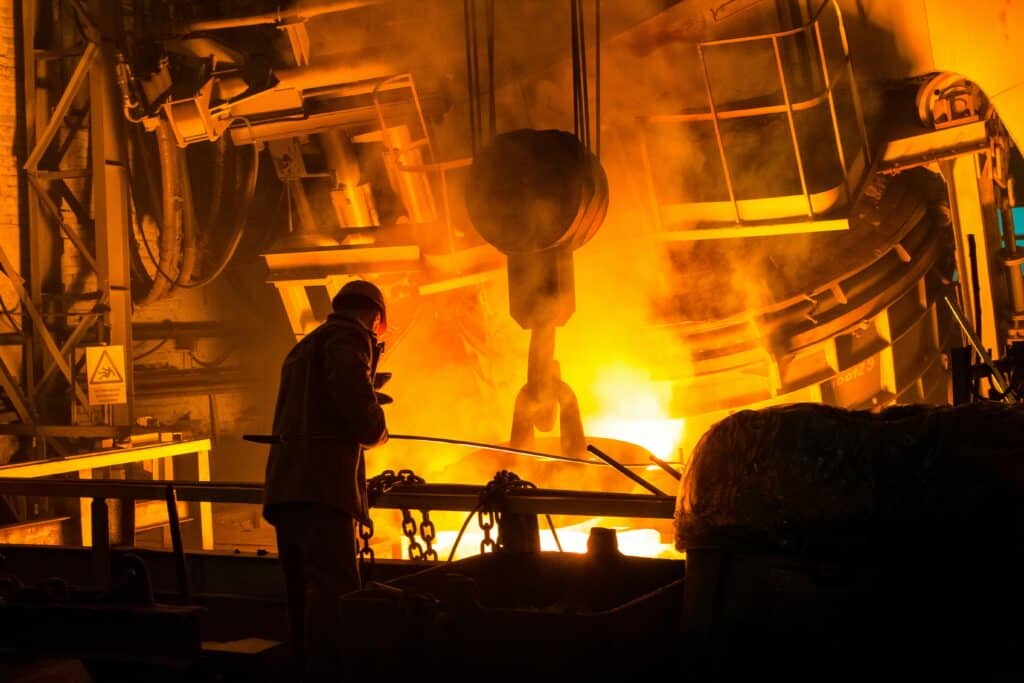
Steel is expected to be one of the sectors most affected by CBAM.
India’s steel industry currently relies heavily on blast furnace production using coal based inputs.
By contrast, Europe is gradually transitioning toward electric arc furnace production and hydrogen based steelmaking.
If the carbon intensity of Indian steel remains higher than European benchmarks, exporters could face additional costs under CBAM.
However, the actual impact will depend on:
• future EU carbon prices
• adoption of electric arc furnaces in India
• availability of scrap steel
• renewable electricity access
(Read our sector analysis on the Indian steel industry here →)
CBAM and Aluminium Production in India
Aluminium production is extremely electricity intensive. This may influence its exposure to carbon pricing policies.
In India, a large portion of electricity used in aluminium smelting comes from coal based power plants.
This could create a carbon intensity disadvantage compared to producers using cleaner electricity sources.
If CBAM carbon pricing becomes significant, aluminium exporters may need to consider:
• renewable electricity procurement
• improved energy efficiency
• low carbon power sourcing
(Explore the aluminium sector overview →)
Fertilisers and Carbon Border Adjustment Mechanism
Fertiliser production, particularly ammonia, is also highly energy intensive. Fertiliser production, particularly ammonia manufacturing, is closely tied to natural gas and energy costs.
If carbon accounting becomes more stringent under CBAM, fertiliser exporters could face increasing reporting requirements and potential carbon costs.
However, the transition toward green ammonia may gradually change the competitive landscape.
(Read more about fertiliser sector decarbonisation →)
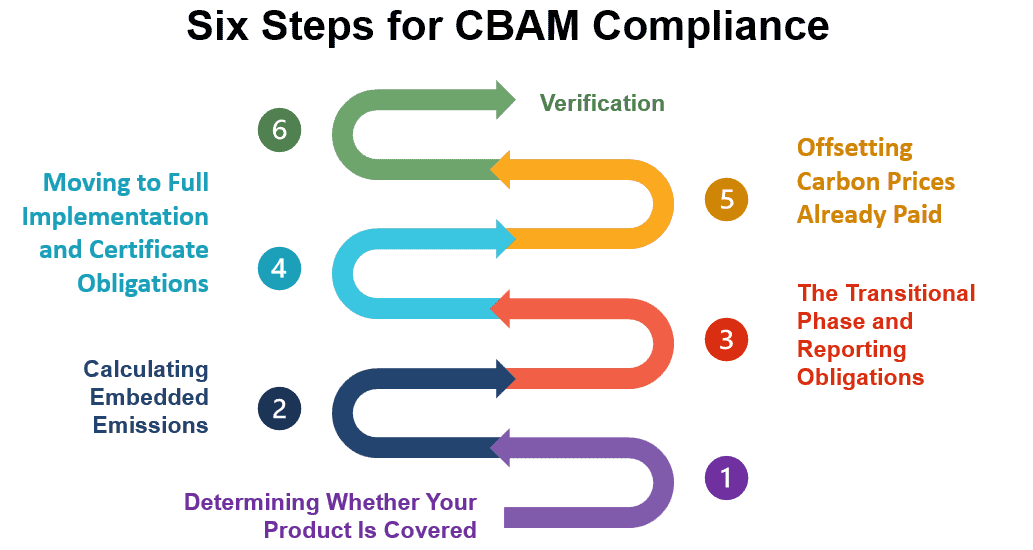
The Transition Phase of Carbon Border Adjustment Mechanism
CBAM is being introduced gradually.
The transitional phase began in 2023, during which importers must report emissions associated with their products.
During this phase, companies were primarily required to collect and report emissions data, rather than pay carbon charges.
Financial adjustments are expected to begin later as the system becomes fully operational.
This transitional period gives exporters time to adapt reporting systems and understand compliance requirements.
Figure 1. Industrial Decarbonisation Drivers
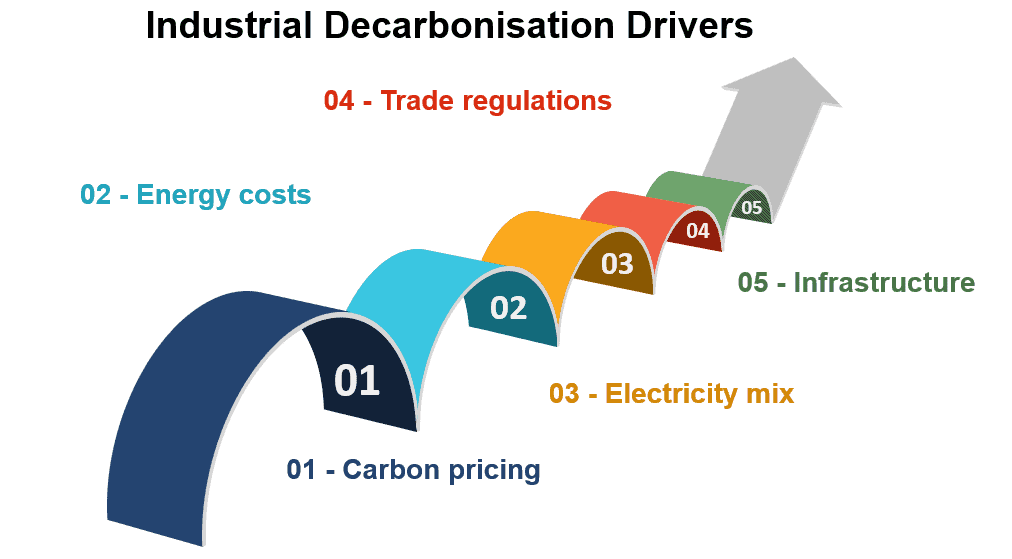
Source: Reclimatize Research, Design by PresentationGO.com
How Indian Industry May Respond
Indian exporters are likely to respond to CBAM in several ways. These include:
Improving Emissions Monitoring
Companies may need to develop more accurate systems for measuring embedded carbon emissions in their products.
Increasing Energy Efficiency
Energy efficiency improvements can reduce emissions intensity and improve competitiveness.
Electricity markets and carbon pricing frameworks will play an important role in determining industrial competitiveness.
(Explore our analysis of power and carbon markets →)
Transitioning to Cleaner Energy Sources
Greater use of renewable electricity may help reduce carbon intensity in some sectors.
Engaging in Trade and Policy Dialogue
Governments and industry bodies are already discussing how CBAM interacts with global trade rules and climate commitments.
Key Terms Explained
Carbon Leakage
When companies move production to countries with weaker climate policies in order to avoid carbon costs.
Embedded Emissions
The total greenhouse gas emissions generated during the production of a product.
EU Emissions Trading System (ETS)
A carbon pricing system where companies must purchase allowances for their emissions.
The Broader Implications for Global Trade
CBAM could represent a major shift in how international trade operates.
Traditionally, competitiveness was determined primarily by:
• labour costs
• resource availability
• productivity
In the future, carbon intensity could become another important factor influencing trade flows.
Countries that succeed in reducing industrial emissions may gain advantages in markets with carbon pricing systems.
Conclusion
The Carbon Border Adjustment Mechanism marks a significant development at the intersection of climate policy and global trade.
For India, CBAM does not necessarily represent an immediate disruption. However, it does highlight the growing importance of industrial emissions, energy sources and production pathways.
As global climate policies evolve, industries that understand and adapt to these changes will likely be better positioned to remain competitive in international markets.
Frequently Asked Questions
What is the Carbon Border Adjustment Mechanism?
The Carbon Border Adjustment Mechanism is a European Union policy that applies a carbon price to certain imported goods in order to prevent carbon leakage and maintain fair competition with EU producers.
How will CBAM affect India?
CBAM may affect India primarily through exports of steel, aluminium and fertilisers to the European Union. Exporters may need to report emissions and potentially pay carbon adjustments depending on the carbon intensity of their production.
Why did the EU introduce CBAM?
The EU introduced CBAM to prevent carbon leakage, protect the competitiveness of European industries and encourage global reductions in industrial emissions.
When will CBAM fully apply?
The mechanism is currently in a transitional phase focused on emissions reporting. Financial adjustments are expected to be implemented gradually as the system becomes fully operational.